Mii no Kotobuki Fuku vs +14: Two Very Different Sakes from One Fukuoka Brewery
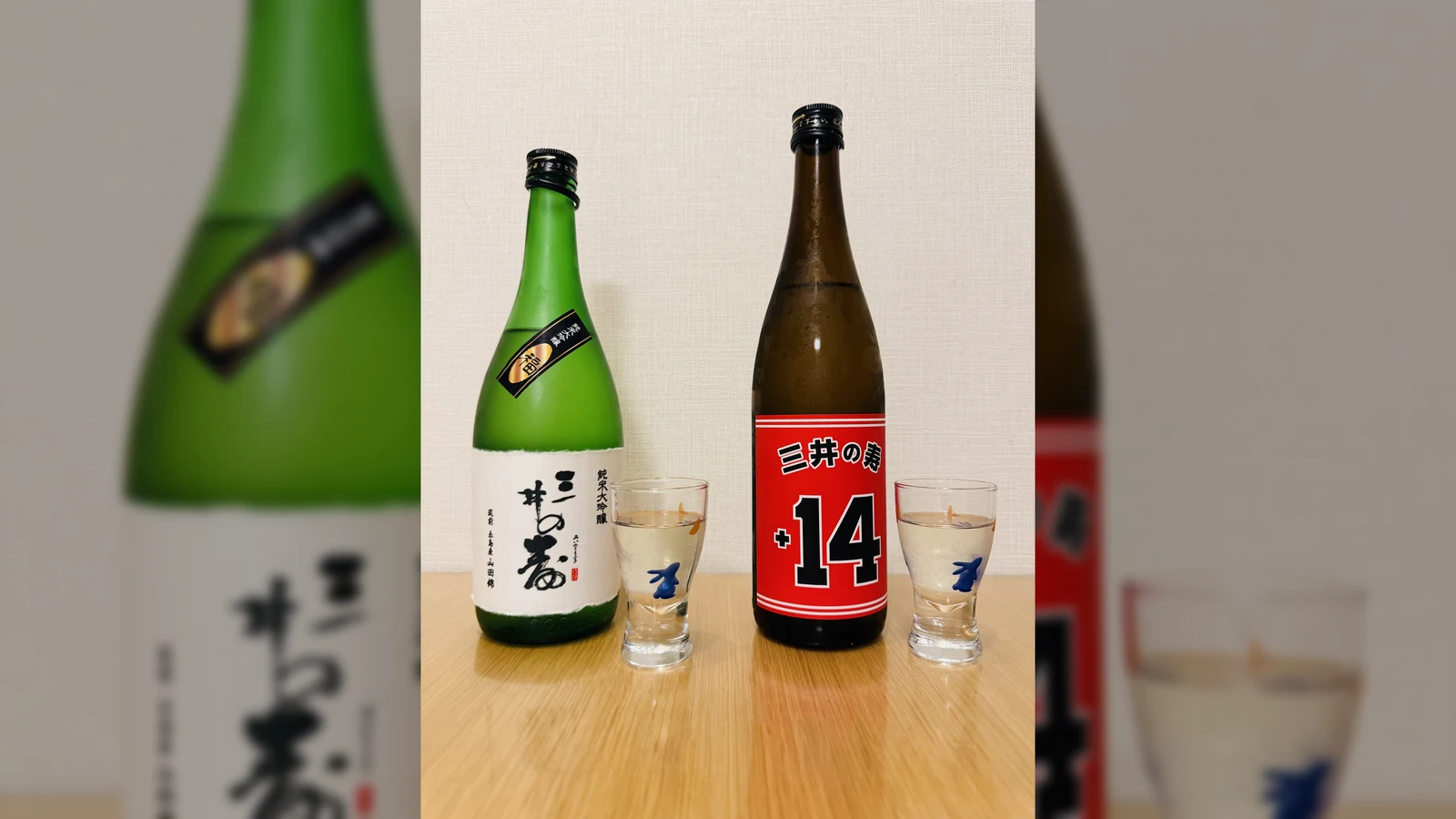
Table of Contents
Two bottles from the same brewery do not always tell the same story.
That became especially clear when I opened two very different bottles from Mii no Kotobuki in Fukuoka Prefecture: Junmai Daiginjo Fuku and Junmai Ginjo Okarakuchi +14.
Even before tasting them, the contrast was obvious.
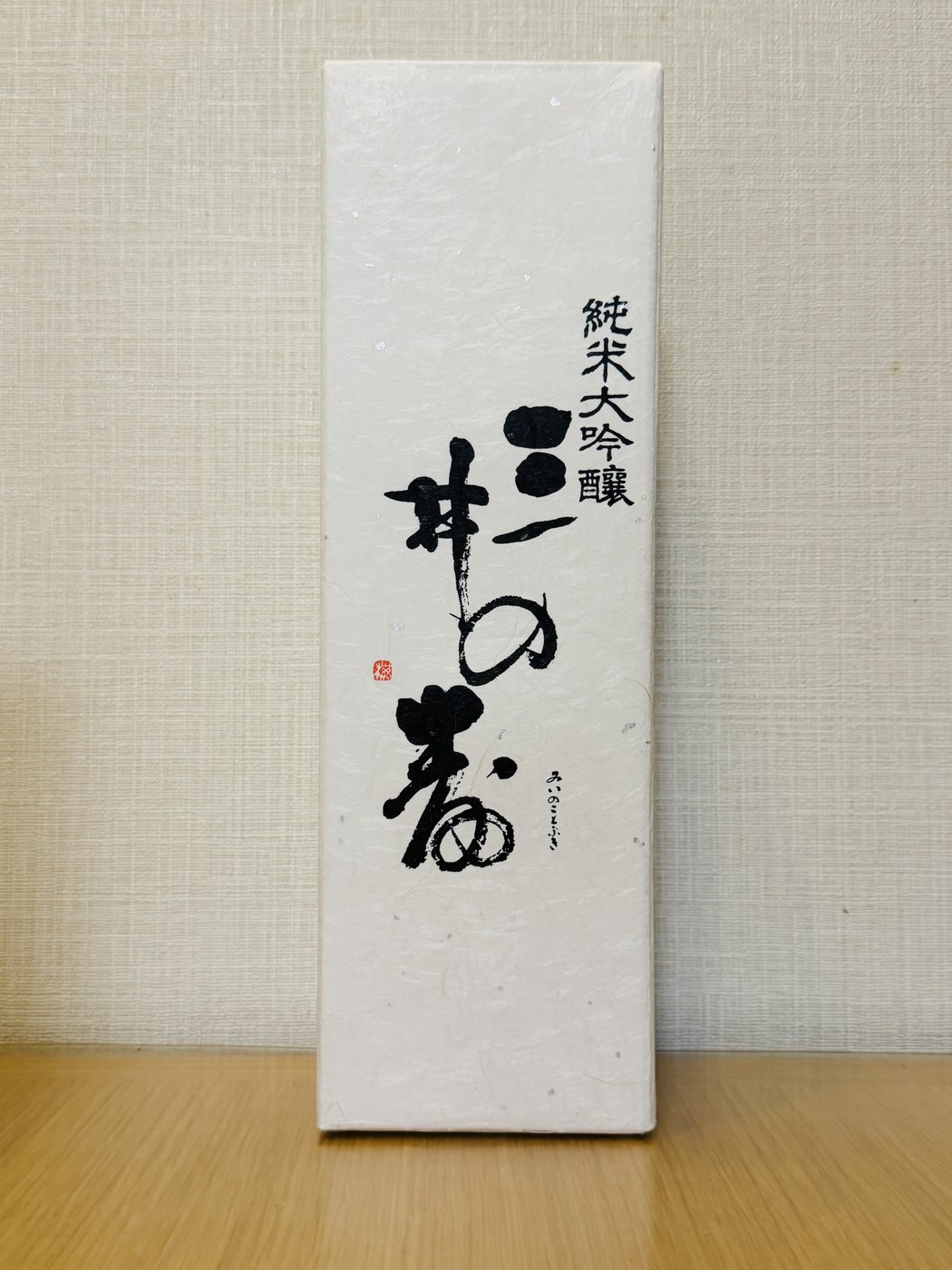
Fuku comes in a green bottle with gold foil and a restrained white label, presented in a traditional-looking white box that immediately signals a sake for a special occasion.
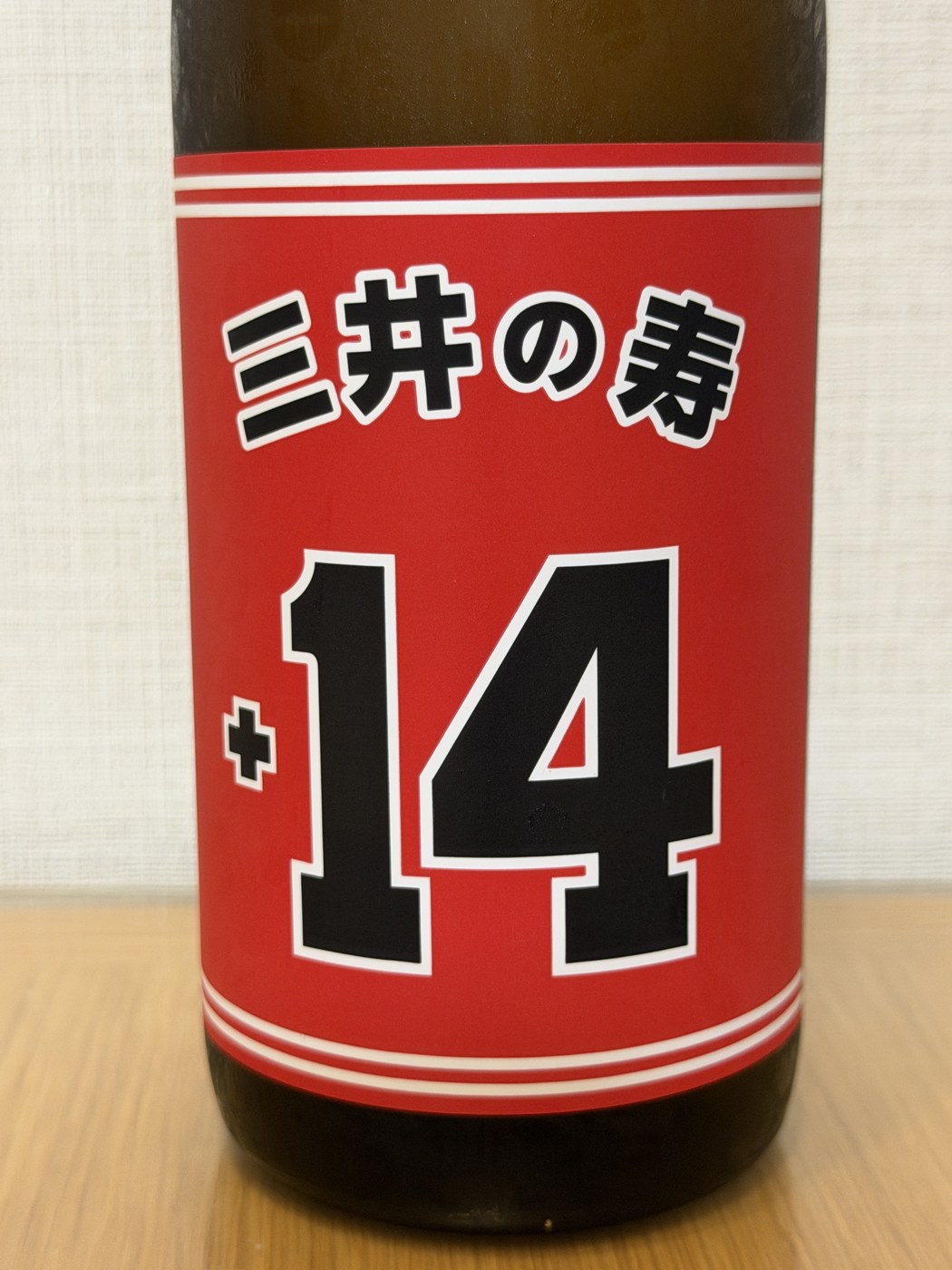
+14 could hardly look more different. Its bold red label is dominated by a huge black “14”—a design inspired by a well-known basketball manga character.
The contrast continued once I opened the bottles. Fuku was soft, elegant, and fruity, and easy to enjoy on its own. +14 was sharp, dry, and almost austere at first—but became far more compelling once food entered the picture.
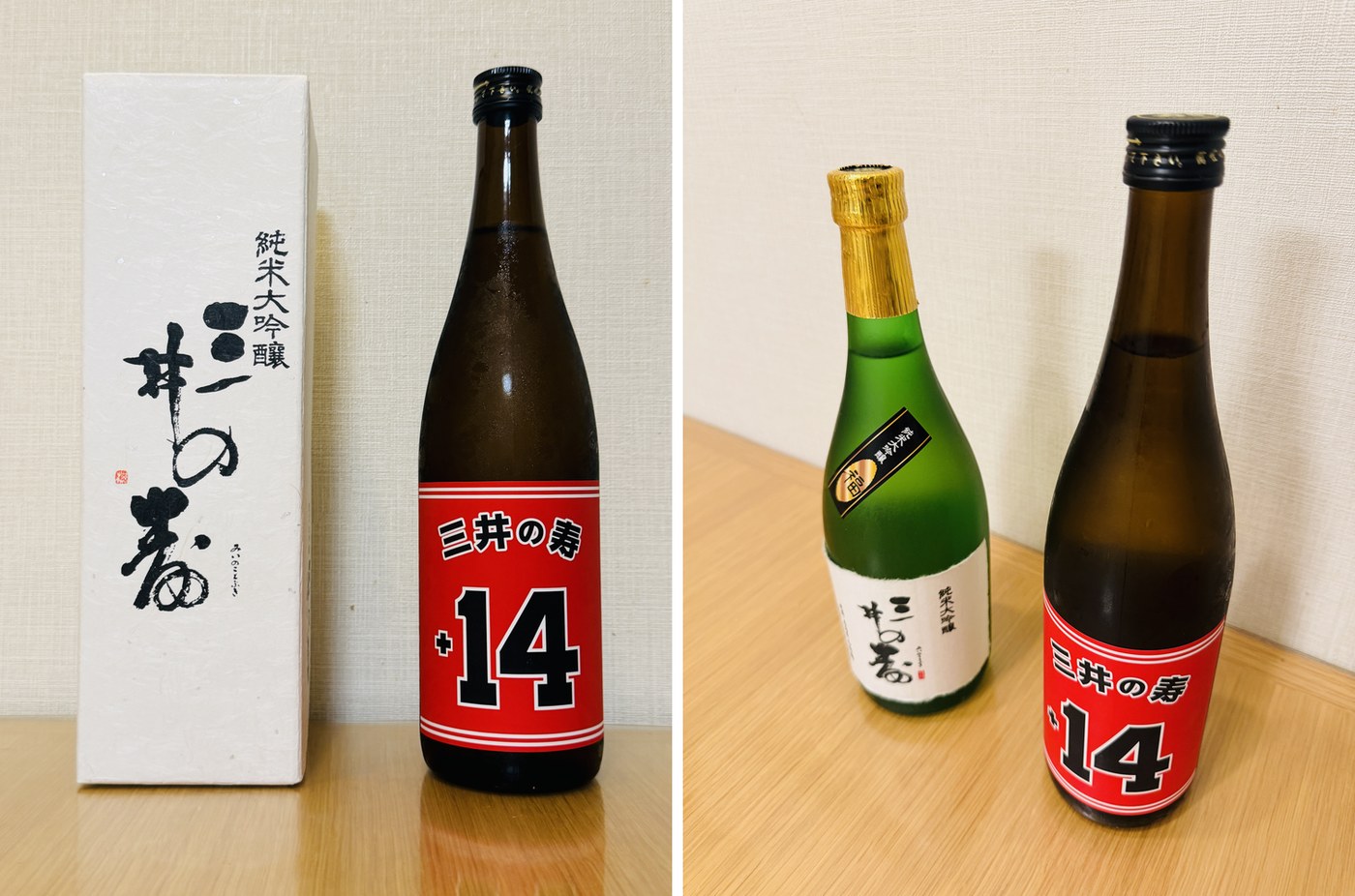
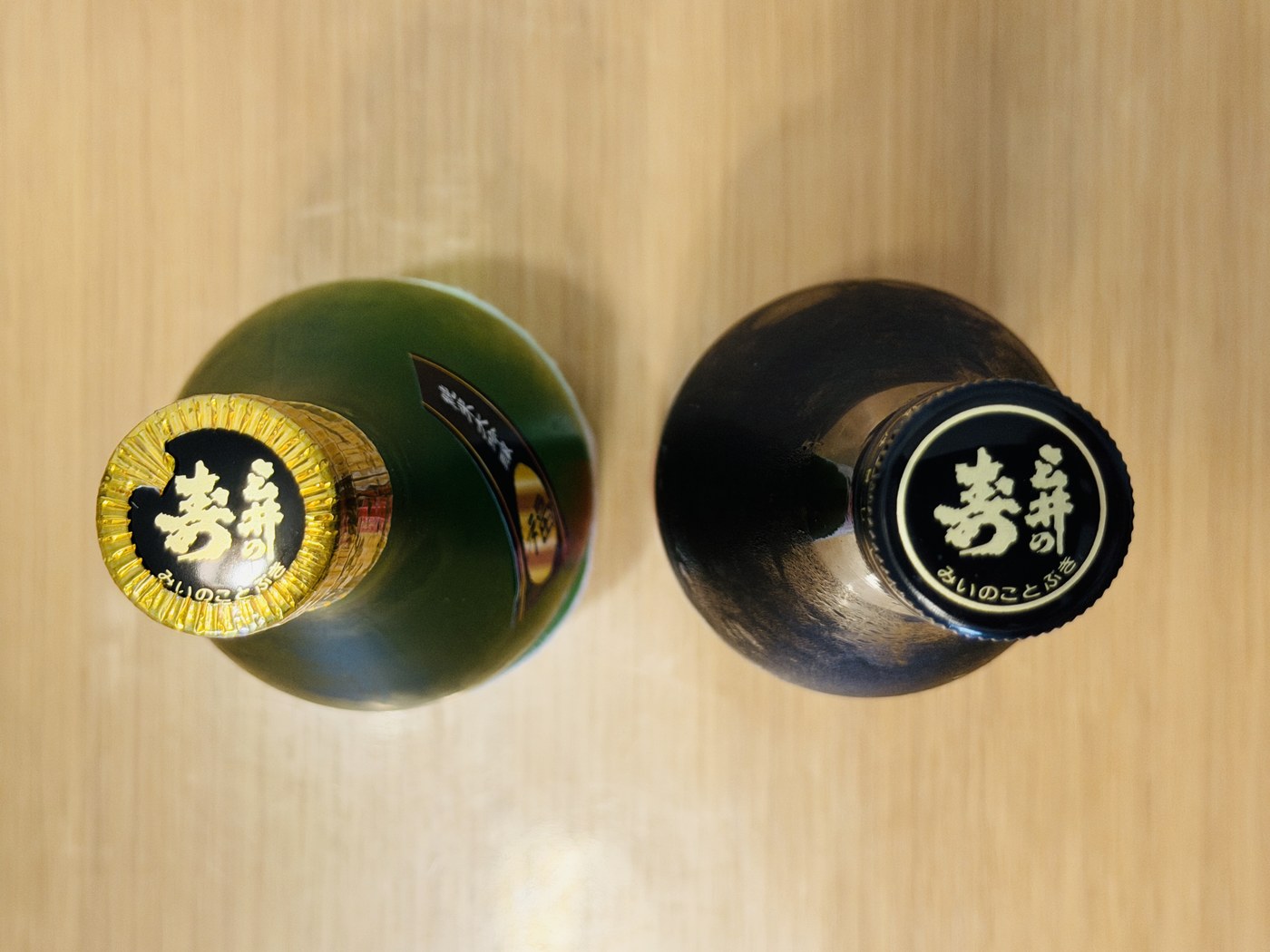
Fuku’s traditional box on the left, +14’s bold red “14” label on the right — the contrast starts before you even open either bottle.
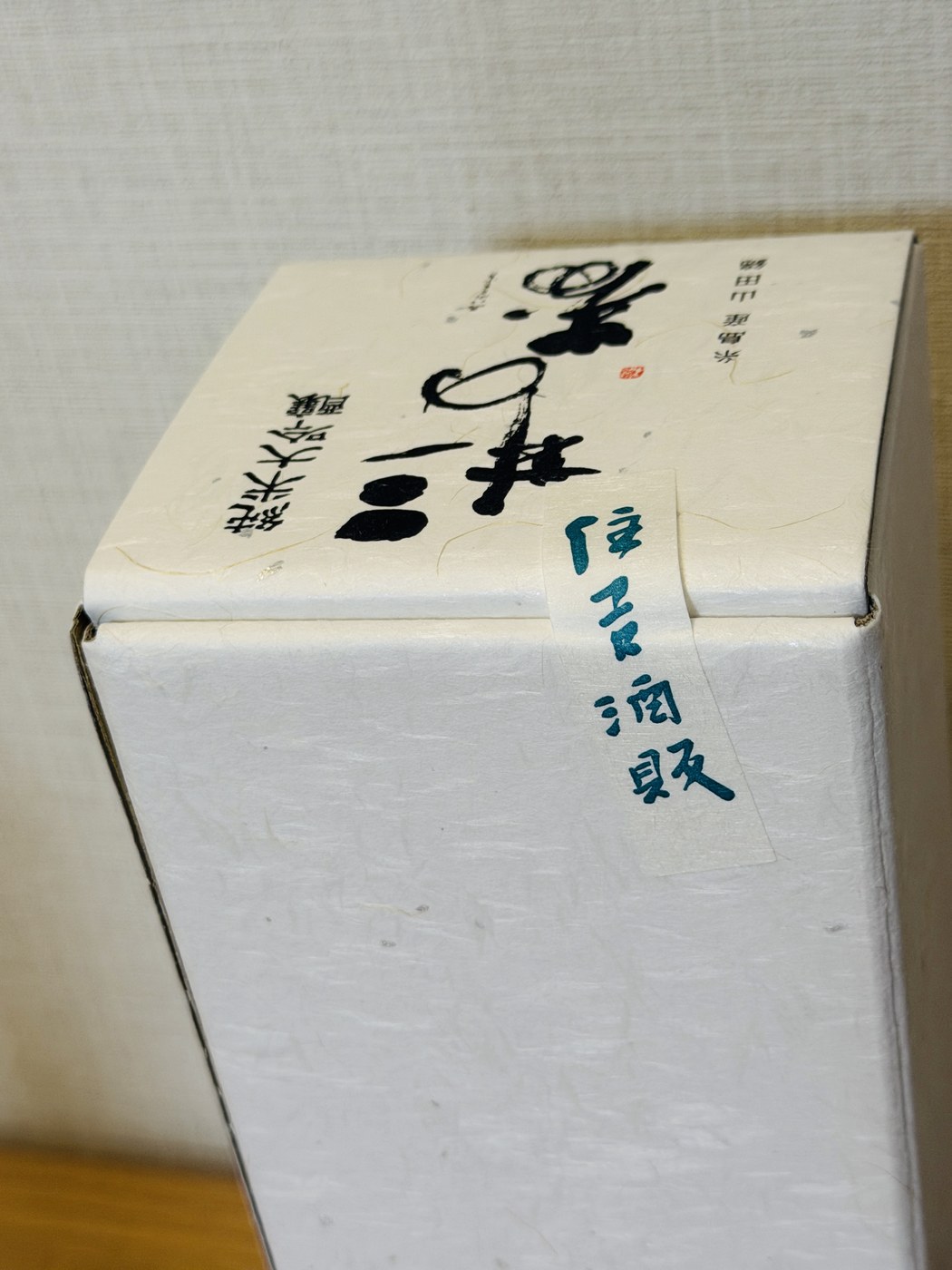
I bought both bottles at Sumiyoshi Shuhan, the kakuuchi counter and retailer inside Hakata Station where I had already discovered several other Kyushu sakes. The Fuku box still carries the shop’s handwritten tape.
Two Sakes from Mii no Kotobuki
Mii no Kotobuki is a sake brewery in Tachiarai, Fukuoka Prefecture. The brewery was founded in 1922 and is located in Mii-gun, Fukuoka.
Both bottles I tasted use Yamada Nishiki rice, but their specifications and drinking experiences are quite different.
| Junmai Daiginjo Fuku | Junmai Ginjo +14 | |
|---|---|---|
| Classification | Junmai Daiginjo | Junmai Ginjo |
| Rice | Yamada Nishiki from Itoshima, Fukuoka | Yamada Nishiki |
| Polishing ratio | 50% | 60% |
| Alcohol | 16% | 14% |
| Overall impression | Elegant, rounded, fruity | Very dry, sharp, crisp |
| Best for me | Drinking on its own | Drinking with food |
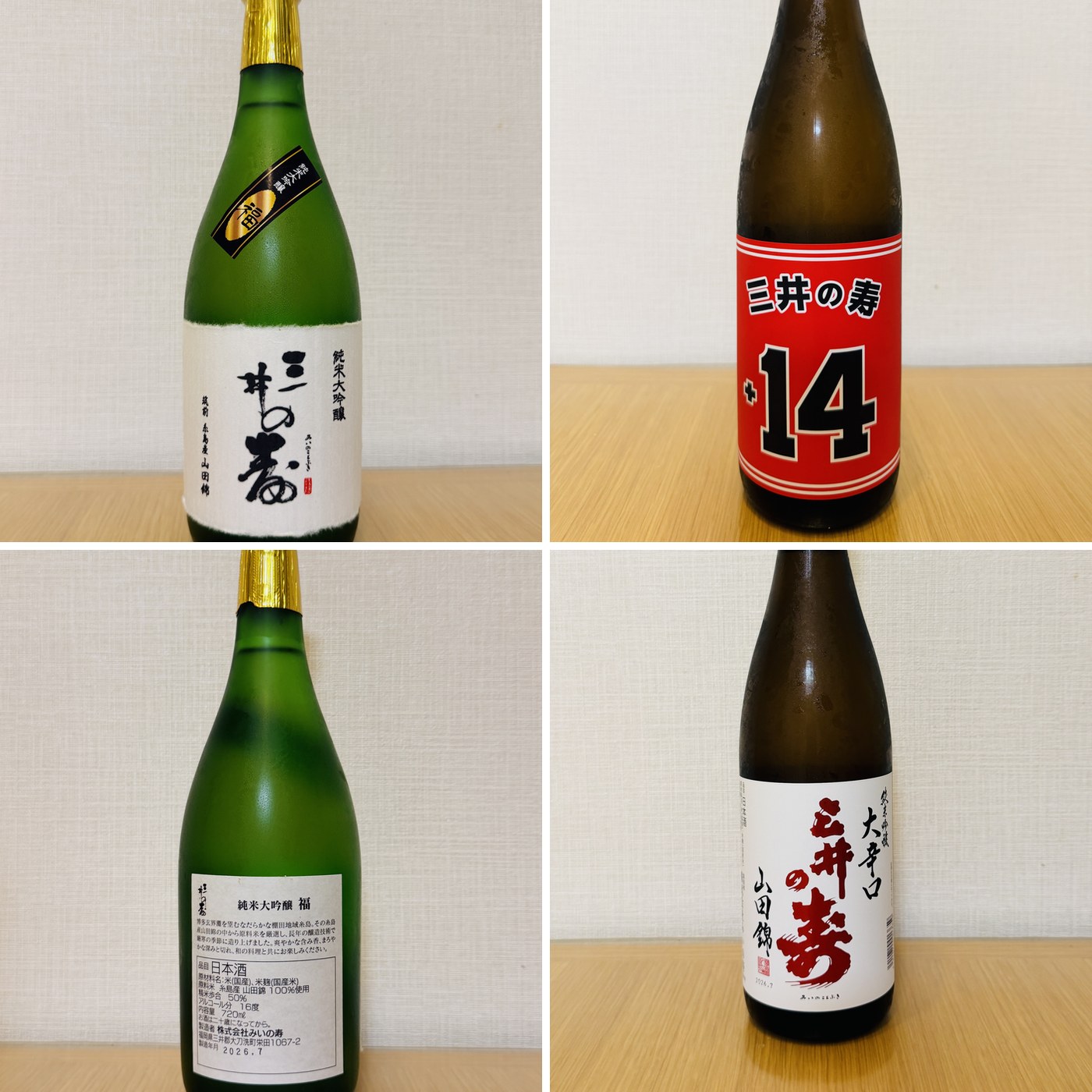
Front and back labels for both bottles. Fuku (left) is 50% polished at 16% alcohol; +14 (right) is 60% polished at 14% alcohol — both from Yamada Nishiki rice.
Fuku is not only presented like a special bottle. It has also received recognition in sake competitions: Kura Master lists Mii no Kotobuki Junmai Daiginjo Fuku as a Platinum Award sake in the Junmai Daiginjo category in both 2023 and 2024. The brewery also notes that Fuku was awarded Gold at SAKE COMPETITION 2023 and ranked third among the Junmai Daiginjo Gold winners.
I did not want those awards to decide my impression before tasting. Still, they made me curious to see whether the sake would feel as refined in the glass as its presentation suggested.
The “+14” in the name refers to the sake’s Sake Meter Value, or nihonshudo—a rough sweetness/dryness indicator. In general, higher positive numbers suggest a drier profile, though the actual taste also depends on acidity, umami, aroma, temperature, and food.
So before opening the bottle, I had one obvious question: does +14 actually taste as dry as the number suggests?
For me, the answer was yes.
How I Tasted Them
I opened both bottles on August 19, 2026, at around 9:30 p.m. They had been kept in the refrigerator and were taken out about five minutes before tasting, so both were well chilled when I began.
I poured them into matching glass sake cups and first tasted them on their own. I returned to both around 30 minutes later as their temperatures gradually rose, then paired them with thinly sliced cured ham to see how food changed the experience. Finally, I tasted both again the following day.
My aim was simply to give both bottles the same conditions and pay attention to how differently they behaved.
Fuku: Soft, Fruity, and Refined
Fuku immediately felt like the more welcoming of the two.
Its aroma was clearly fruity and floral—impressions that reminded me of apple, pear, melon, and a little citrus. Not aggressive, but with an elegant presence that became more noticeable as the sake warmed.
The first sip reinforced that impression. Fuku was soft and rounded on the palate, with clear sweetness and umami but without feeling heavy. The acidity gave it shape, yet it felt integrated rather than sharp.
If I had to reduce my first impression to three words: elegant, gentle, and fruity.
The texture was also one of its strengths—smooth and composed, making it easy to enjoy slowly on its own. There was enough structure to work with food, but Fuku never needed food in order to show its best qualities.
+14: Dry Means Dry
Then came +14. The change in direction was immediate.
Its aroma was much less fruit-driven than Fuku, leaning instead toward rice-like and slightly lactic impressions.
The first sip felt sharp. There was very little perceived sweetness, and the combination of acidity, bitterness, and a sharper mouthfeel gave the sake a more angular character. The finish was extremely crisp.
This was not a case where a high Sake Meter Value sounded more dramatic on paper than it tasted in the glass. +14 tasted genuinely dry—especially when tasted immediately after the softer, sweeter Fuku.
There was still umami underneath, but on its own, the sharpness dominated. For someone new to sake, I could imagine this feeling severe. For someone who already enjoys dry sake, that directness may be exactly what makes it interesting.
Honestly speaking, this is the one clear downside I’d flag about +14: if you don’t already drink dry sake, the first sip on its own can come across as harsh rather than exciting, and I don’t think it’s a bottle that will suit every palate. It rewards patience—and, as I found next, food.
And then I tried it with food.
The Moment +14 Made Sense — and the Mitsui Connection
I paired +14 with cured ham.
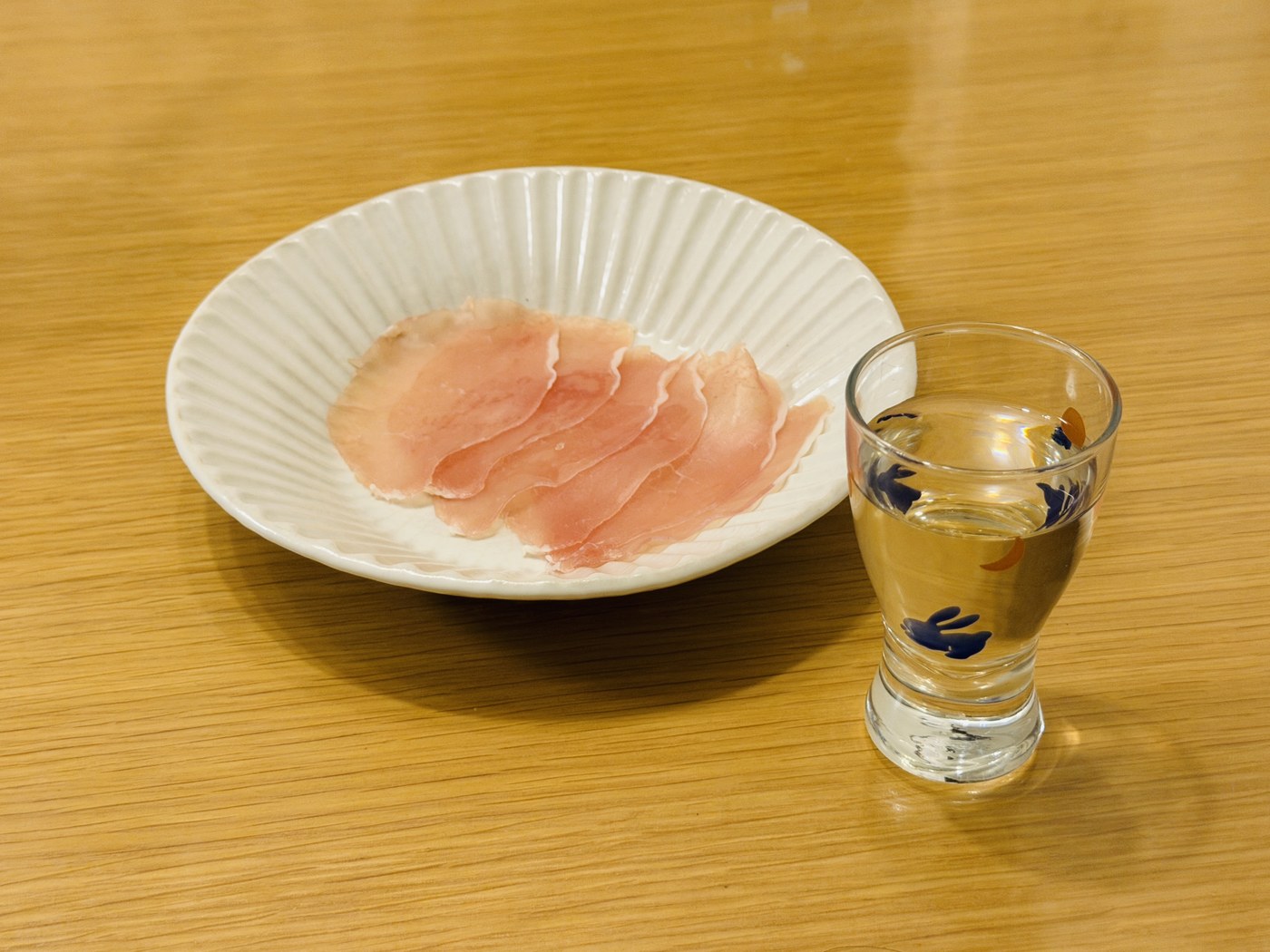
On its own, the dryness and sharpness had been the main event. With the salty, savory ham, the balance shifted. The pairing brought forward a sweetness that had been hard to notice when drinking the sake alone, and the umami became easier to perceive. The sake remained dry, but its sharpness no longer felt isolated—it became one part of a larger balance.
That was also when the No. 14 label came back to mind.
The brewery’s official history says that in 2013 it released a homage label based on the uniform of Hisashi Mitsui, the sharpshooter from the legendary basketball manga Slam Dunk. The connection runs deeper than a jersey number: the brewery name, 三井の寿, contains the same kanji as Hisashi Mitsui’s name, 三井 寿.
In this bottle, the number 14 appears in three different ways: the jersey number, the Sake Meter Value, and the alcohol percentage.
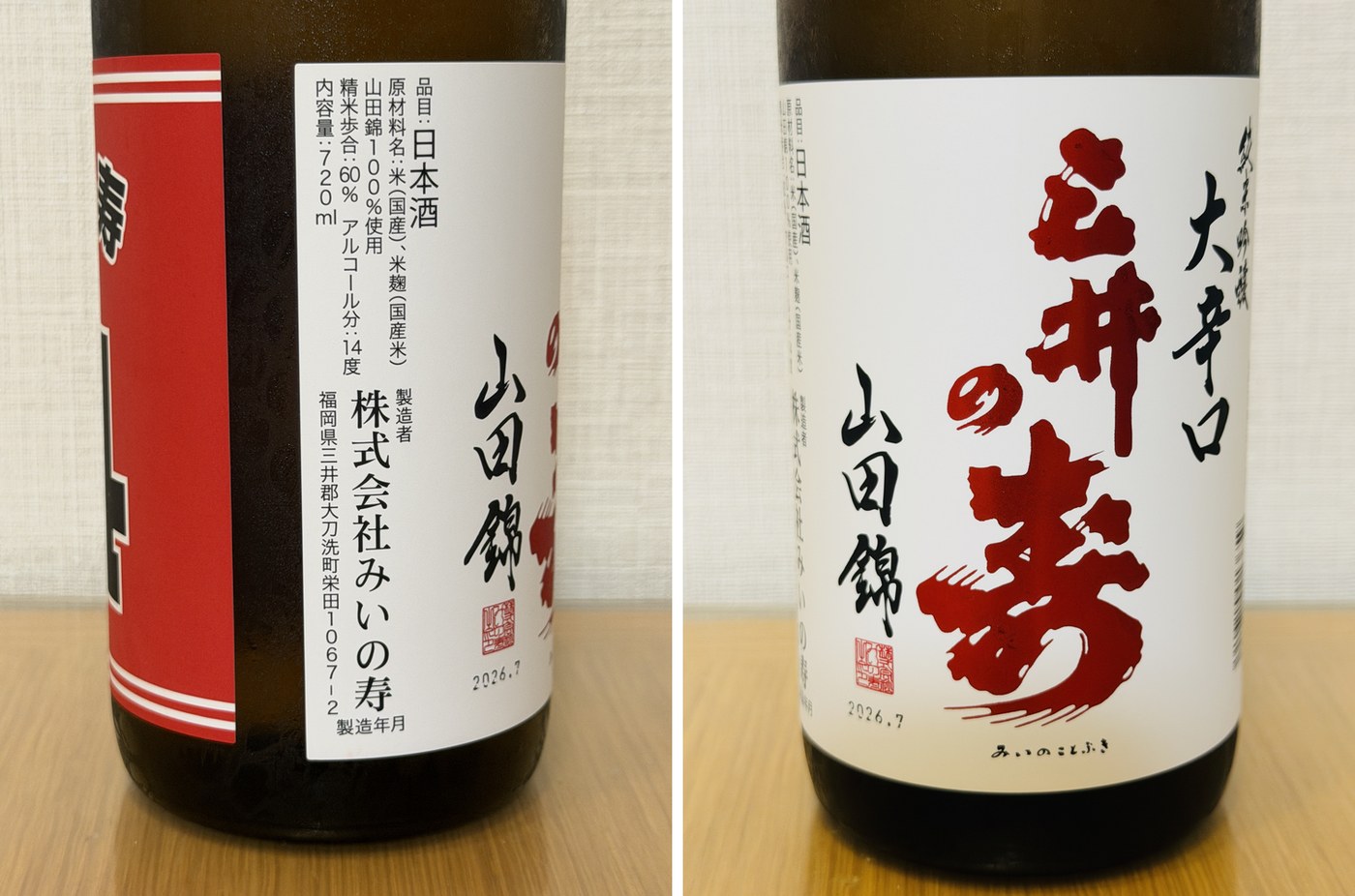
The back label confirms the specs: 60% polishing ratio, 14% alcohol, and Yamada Nishiki rice.
While drinking +14 with food, I found myself remembering the more difficult and sharp-edged side of Mitsui’s character before he fully returned to the basketball team. Shueisha’s summary of Slam Dunk volume 6 describes Mitsui as a former middle-school MVP who once came to destroy the basketball club after his frustration and loss of direction. In volume 9, Shueisha describes him as returning to basketball after abandoning his pride, with his ability as a former MVP shooter still intact.
Of course, this is my own reading. But in a playful way, the experience felt surprisingly similar.
On its own, +14 was distinctive but difficult. With food, its sharpness began to make sense as part of a whole.
That made the bottle more memorable to me than the number on the label alone ever could.
Fuku vs +14 Side by Side
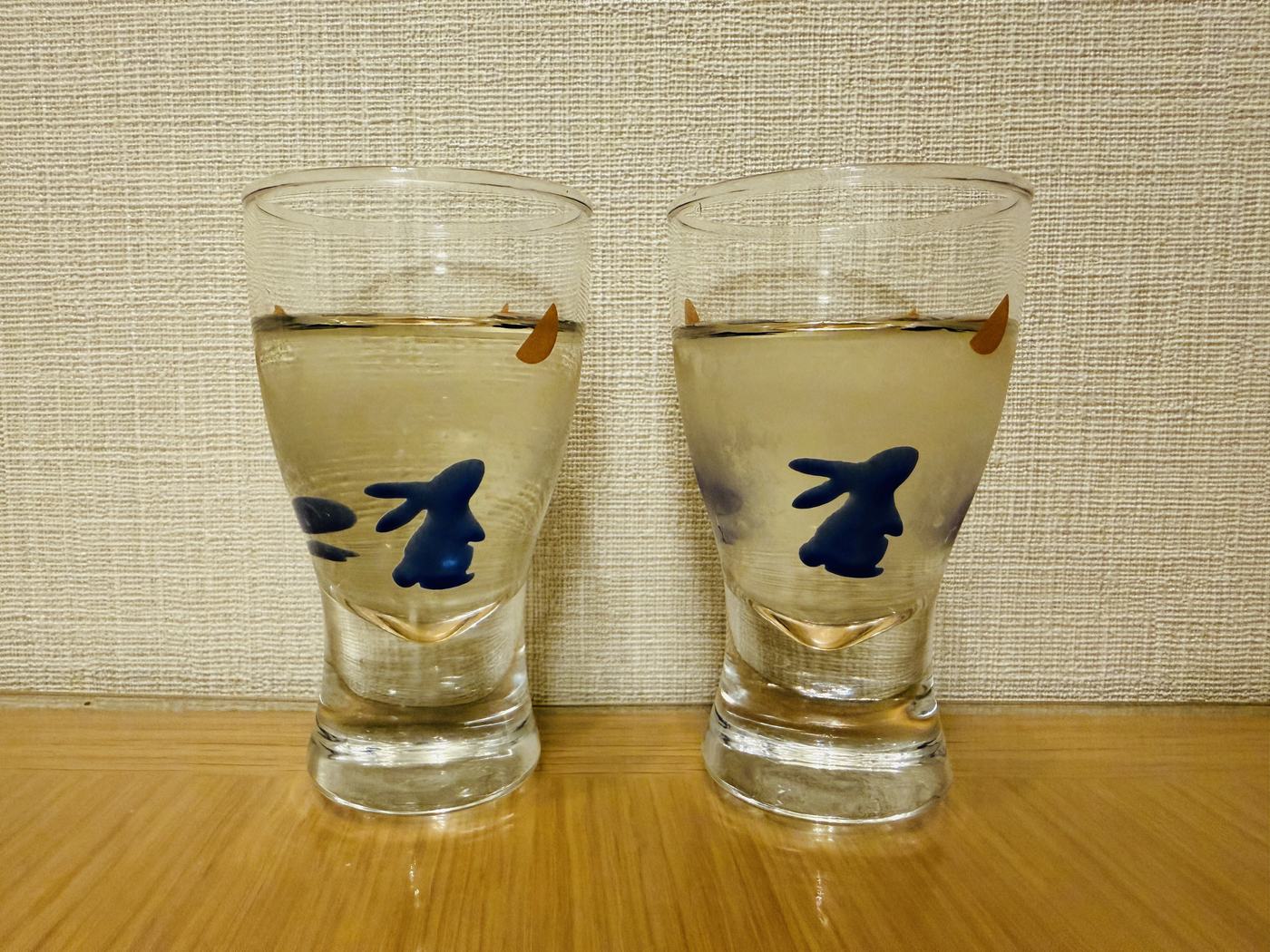
The overall aroma intensity was not dramatically different between the two, but the type of aroma clearly was: Fuku leaned toward fruit and flowers, +14 toward rice and slightly lactic notes.
On the palate, the contrast was even clearer.
Fuku was softer, sweeter, more rounded, and easier to enjoy on its own. It had a refined fruitiness and enough umami to feel satisfying without becoming heavy.
+14 was much drier, sharper, and more angular. It showed very little obvious sweetness when tasted alone, but its crispness made it far more effective with food.
If I had tasted these blind without knowing the labels, I am not sure I would have guessed they came from the same brewery. That may be the most interesting part of the comparison.
This was not simply Junmai Daiginjo versus Junmai Ginjo.
They felt like two sakes created with completely different intentions.
What Happened After 30 Minutes?
Fuku became more expressive as it warmed. Its aroma opened further, and I perceived more sweetness and umami without any loss of composure. That made it especially enjoyable to drink slowly and observe over time.
+14 changed much less. Its dry, crisp personality remained clearly intact. The contrast therefore became even more obvious after 30 minutes: Fuku revealed additional layers while +14 stayed focused on the character it had shown from the start.
Neither sake suffered from the modest rise in temperature.
And the Next Day?
Returning to both bottles the following day, I found neither had changed dramatically. Fuku retained its soft, elegant character; +14 still showed the same sharp dryness and crisp finish.
For me, the second day reinforced their different roles rather than changing my preference.
Pouring a glass of sake to enjoy by itself: Fuku.
Opening a bottle to drink through dinner: +14.
What About the Sake Cup?
I also thought about these two bottles in the context of the sake ware I use at home.
Fuku naturally seemed to suit a more elegant cup. Its refined aroma, soft texture, and gentle sweetness felt at home with a decorative guinomi.
I could imagine it well in a Fukagawa Seiji Botan Kinmiru guinomi.
+14 was more surprising. Although I do not think of it as a celebratory sake in the same way as Fuku, its sharp character worked unexpectedly well with the thin rim of my Fukagawa Seiji porcelain guinomi.
The thin rim seemed to emphasize the sake’s dry attack, and the clean mouthfeel of the cup felt consistent with its crisp personality.
The cup did not change the sake itself. What interested me was how the shape, rim, and visual impression of the cup changed the way I experienced it. That is one reason I increasingly find sake ware difficult to separate from sake tasting. A Takahama ware guinomi or a Gen-emon Kiln soba choko would be worth trying with both bottles too.
Where in Japan
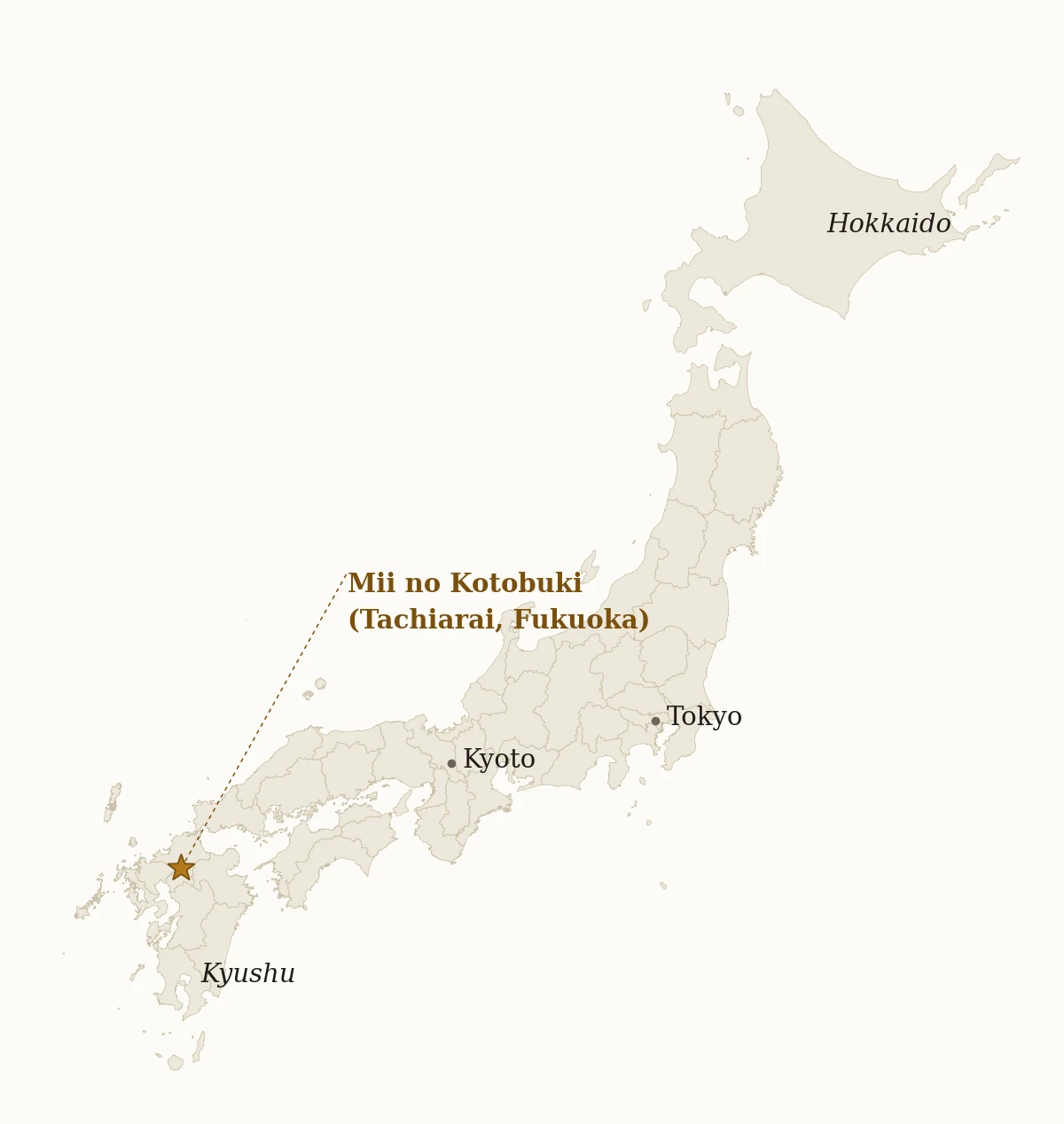
Tachiarai sits in Fukuoka Prefecture, on the island of Kyushu. Both bottles were bought at Sumiyoshi Shuhan, the kakuuchi counter inside Hakata Station, about 20 km from the brewery.
Which Would I Choose?
This comparison does not need a winner—the bottles succeed in different situations.
Choose Fuku for a softer, more elegant sake with fruity aromas and noticeable sweetness. It works well on its own, feels appropriate for a special occasion, and is probably easier for a newcomer to sake to appreciate.
Choose +14 for a genuinely dry, crisp, sharp profile that works especially well with food. It is distinctive, memorable, and more likely to appeal to someone already familiar with dry sake—and it may have one of the most memorable labels in Japanese sake. Just know going in that its dryness is uncompromising, and it will not be to everyone’s taste.
My own conclusion is simple:
Fuku for the glass. +14 for the table.
Final Thoughts
Before this tasting, the “+14” was the obvious hook. After tasting the two bottles side by side, what stayed with me was not the number itself—it was the contrast.
Fuku was elegant, rounded, and gradually more expressive as it warmed. +14 was direct and remarkably consistent, but became more complete when paired with food.
The label says +14. In this case, the number did not feel misleading.
But the pairing also reminded me why a single number can never explain an entire sake. Dryness is only one part of the experience.
And that is a subject I want to explore next: what the Sake Meter Value actually measures, and what it leaves out.
Sake is an alcoholic beverage. This article is intended for readers of legal drinking age in their country — please drink responsibly.